


Photography Portfolio
About My Photography Portfolio
This desktop-first site showcases my favorite photos and the tools I use to make them.
Project duration: 1 week
Problem
Photographers often spread their work across social feeds, folders, and unfinished websites. Viewers rarely get a clear sense of style, process, or how to get in touch.
As a result, strong work gets overlooked and potential clients hesitate to reach out.
Target Audience
Persona 1: The photographer
Photographers with a growing craft need a focused place to show their best work, share process details, and connect with opportunities. Crowded social platforms make that hard.
A dedicated portfolio helps them present a clear point of view and make contact easier for clients and collaborators.

Persona 2: The potential client
Magazine editors work under tight deadlines and cannot spend hours searching uneven social profiles or awkward personal sites.
They need a faster way to review a photographer's work and decide whether to start a conversation.

Photographers need a clearer way to be found. Clients need a faster way to evaluate work. One focused portfolio can serve both.
Ideation Process
How do I showcase photos and tools quickly? Should the site include comments, or keep the focus on a contact path?

Foundation


Final Prototype

Ideas to Build On
Possible next features:


Insights Gained
This was my first one-page site, with privacy as the only separate page. Using my own photos made the project feel personal and kept the design focused on the work itself.
Anchor-based navigation was a new challenge. Solving it reinforced how clear structure helps a single page stay easy to explore without distractions.

SnackShop
About SnackShop
SnackShop is a desktop-first ordering site that helps guests skip long concession lines and choose food with less pressure.
Project duration: 1.5 weeks
Problem
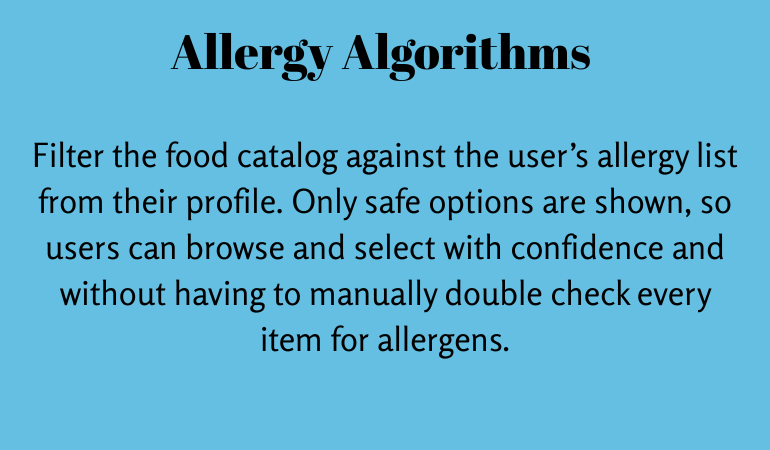
Long concession lines add stress during busy events. Guests often feel rushed at the counter and do not have time to check ingredients, allergies, or menu options carefully.
Rushed orders lead to more mistakes, longer transactions, and a worse experience for both guests and staff.
Target Audience
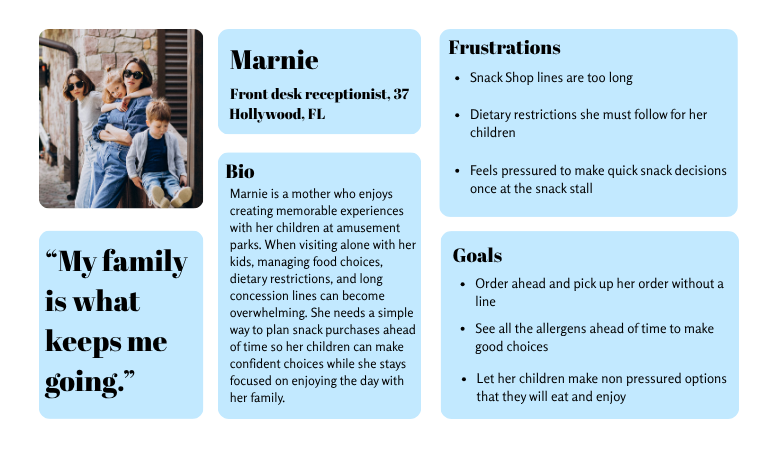
Persona 1: The parent
Parents at amusement parks manage kids, timing, and budgets at once. Waiting in a long food line while supervising children is difficult.
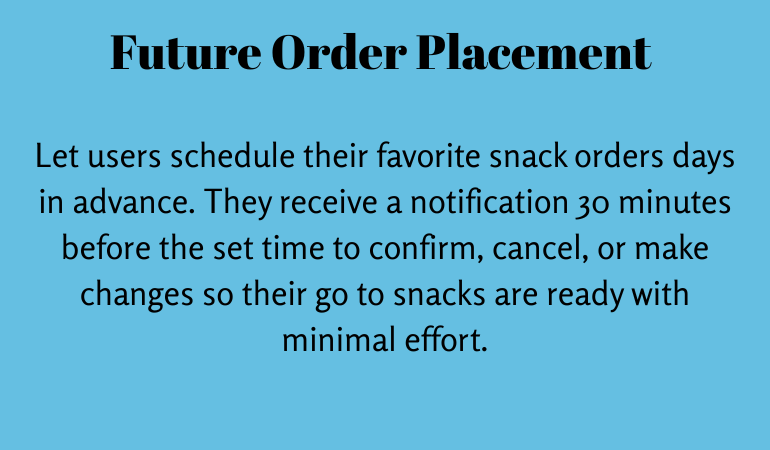
Ordering ahead gives families time to review options and reduce stress before they reach the counter.
Persona 2: The independent guest with mobility issues
Guests with mobility challenges plan around walking distance, rest breaks, and accessibility. Long standing lines can interrupt the day or cut a visit short.
Advance ordering reduces wait time and helps them keep more independence while they enjoy the park.
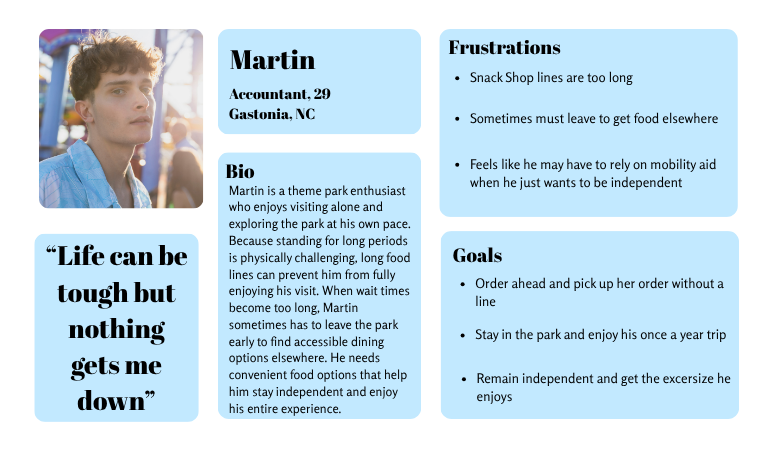
Both audiences benefit from the same core solution: order ahead and skip the long lines.
Ideation Process
How do I keep ordering simple? Would users want a history of past snacks?
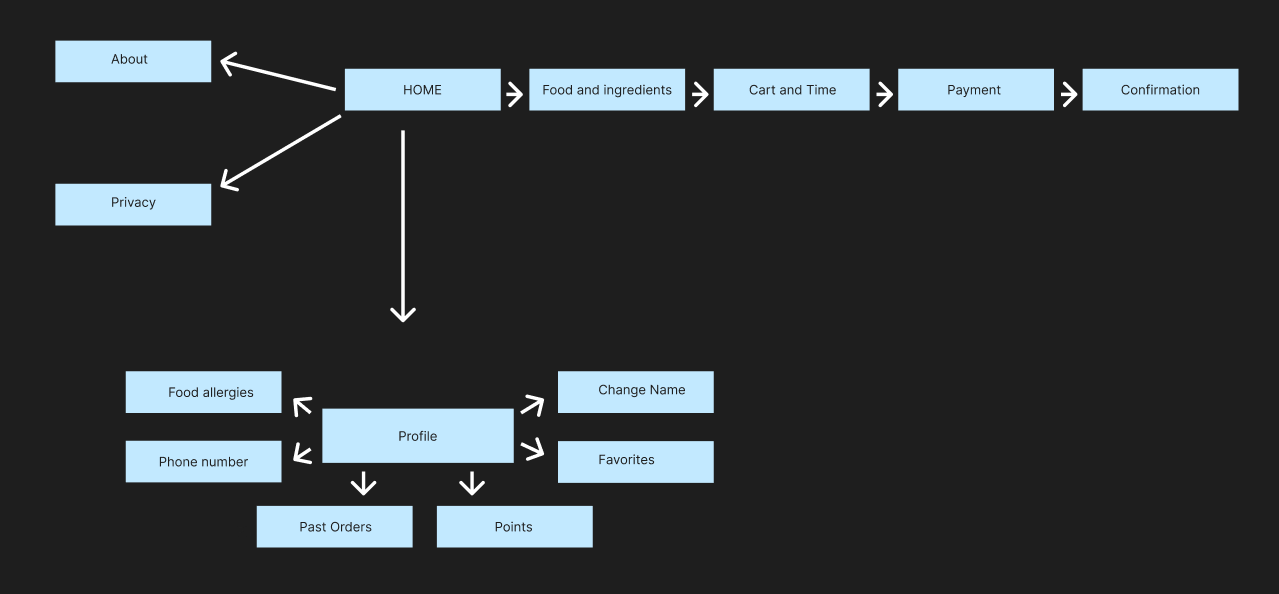
Foundation
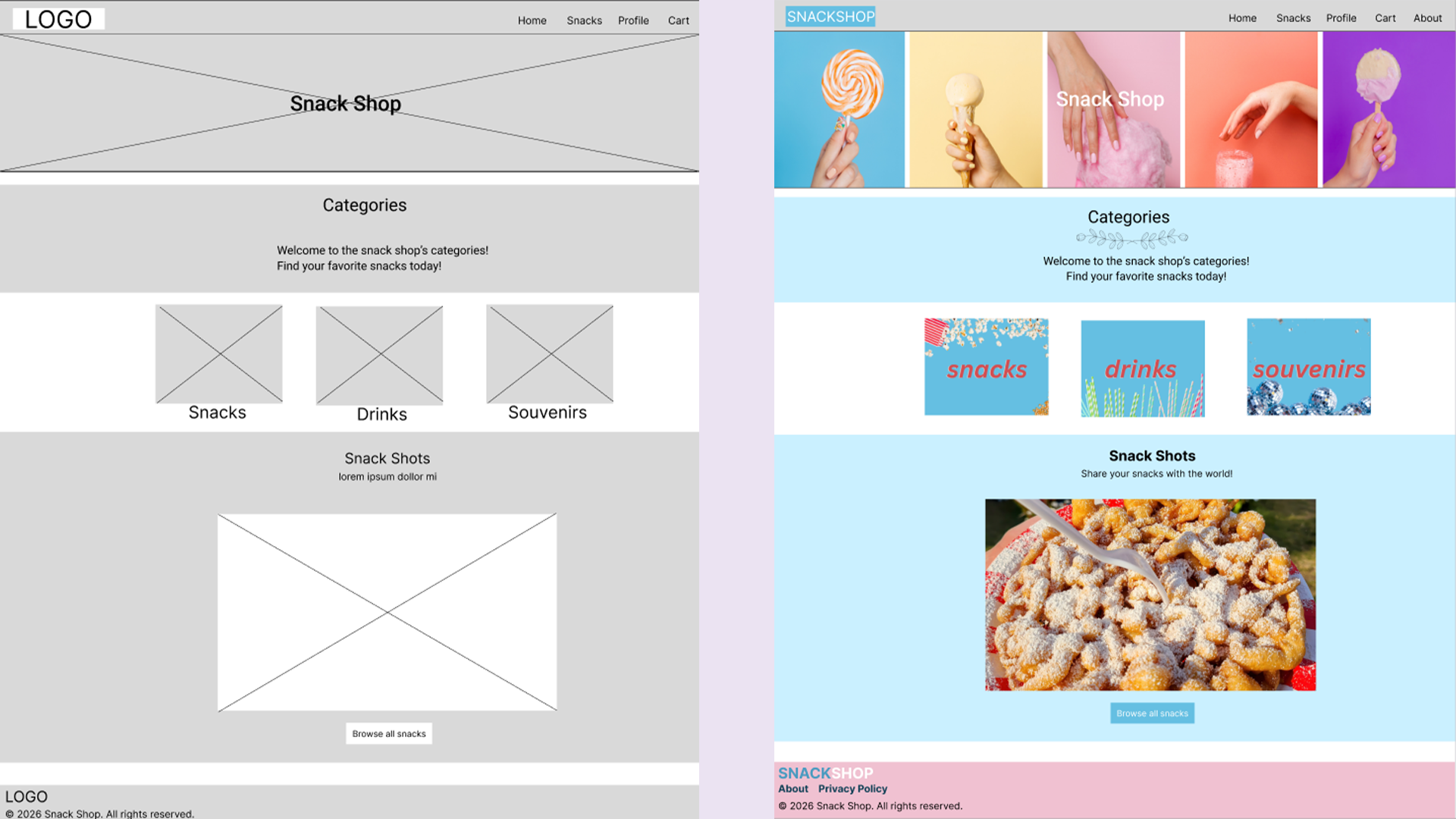

Final Prototype
Ideas to Build On
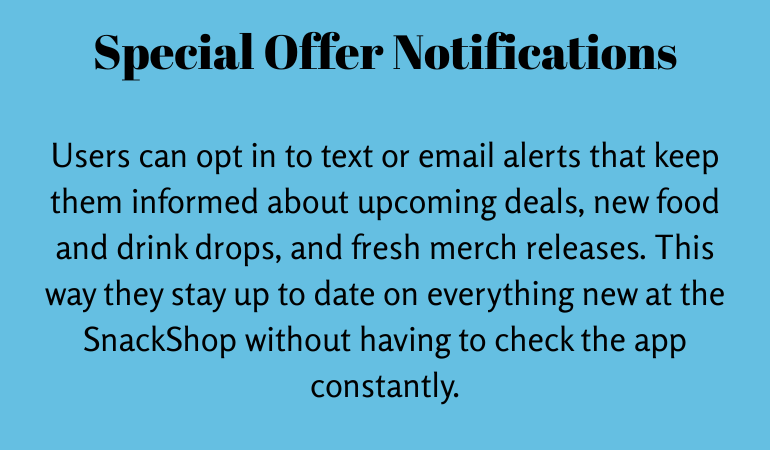
Possible next features:
Insights Gained
SnackShop came from familiar theme-park moments: wanting a favorite snack without losing half the afternoon to a line. That memory shaped a product that feels fun and practical.
I chose a lively visual direction and kept the ordering flow simple, so the site feels fun without getting in the way.

MuseFinder
About MuseFinder
MuseFinder is a desktop-first website that helps people discover nearby museums and the features each one offers.
Project duration: 1 week
Problem
Finding the right museum is harder than it should be. Most location search tools share only basic details, so visitors struggle to compare accessibility options, discounts, tours, family programs, or special exhibitions.
As a result, people miss cultural experiences they would enjoy, and museums miss visitors who would have been a good fit.
Target Audience
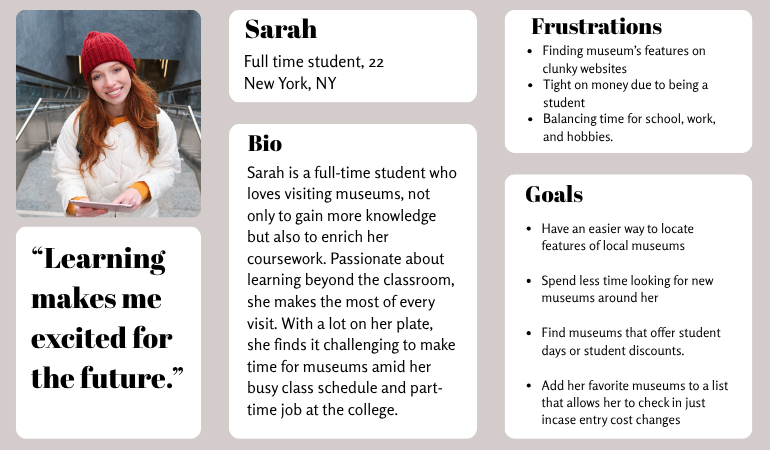
Persona 1: The student
Students want meaningful cultural visits that fit tight budgets and packed schedules. They look for student discounts, free days, and programs tied to their coursework.
They need a fast way to see what is nearby, what each museum offers, and whether a visit is worth their limited time and money.
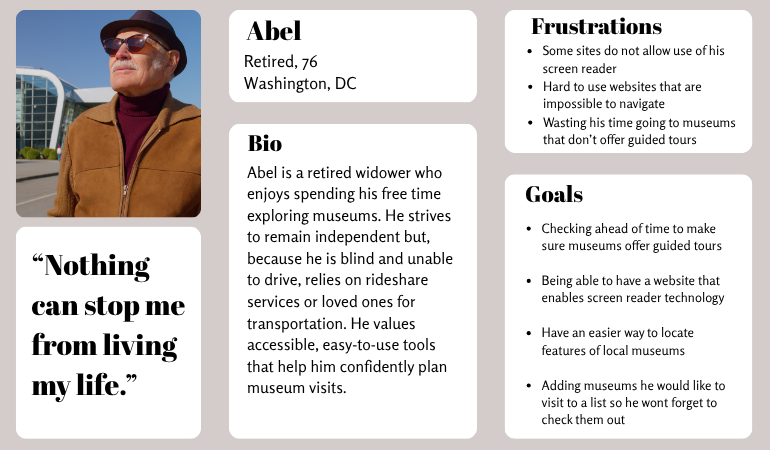
Persona 2: The visually impaired senior
Many older adults with vision loss still want cultural outings and social connection. They rely on screen readers and clear information about guided tours, senior discounts, accessibility support, and transportation.
Because they often depend on family, friends, or rideshare, they need reliable details before they go. Confusing websites make planning harder than it needs to be.
These two audiences have different goals, but both need museum features they can find quickly and understand with confidence.
Ideation Process
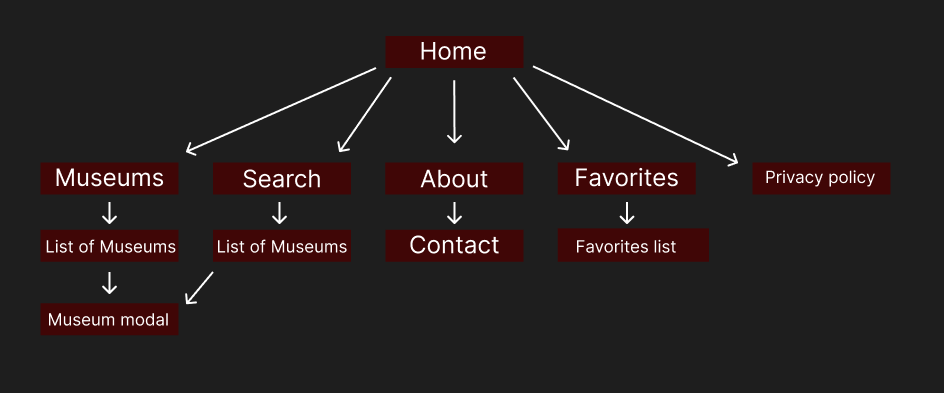
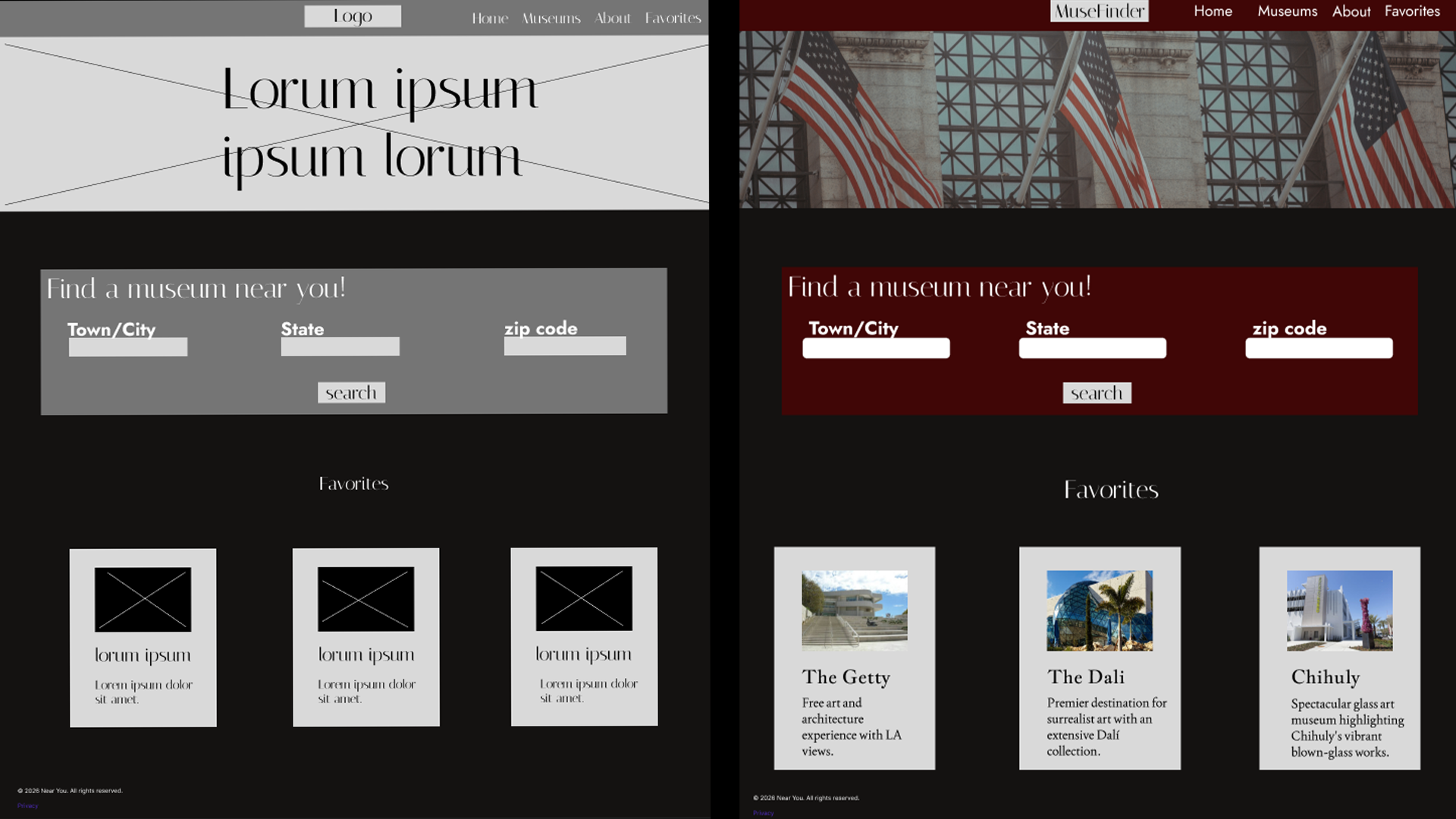
How do I keep the experience simple for people of all ages? Should users be able to save favorite museums for later?
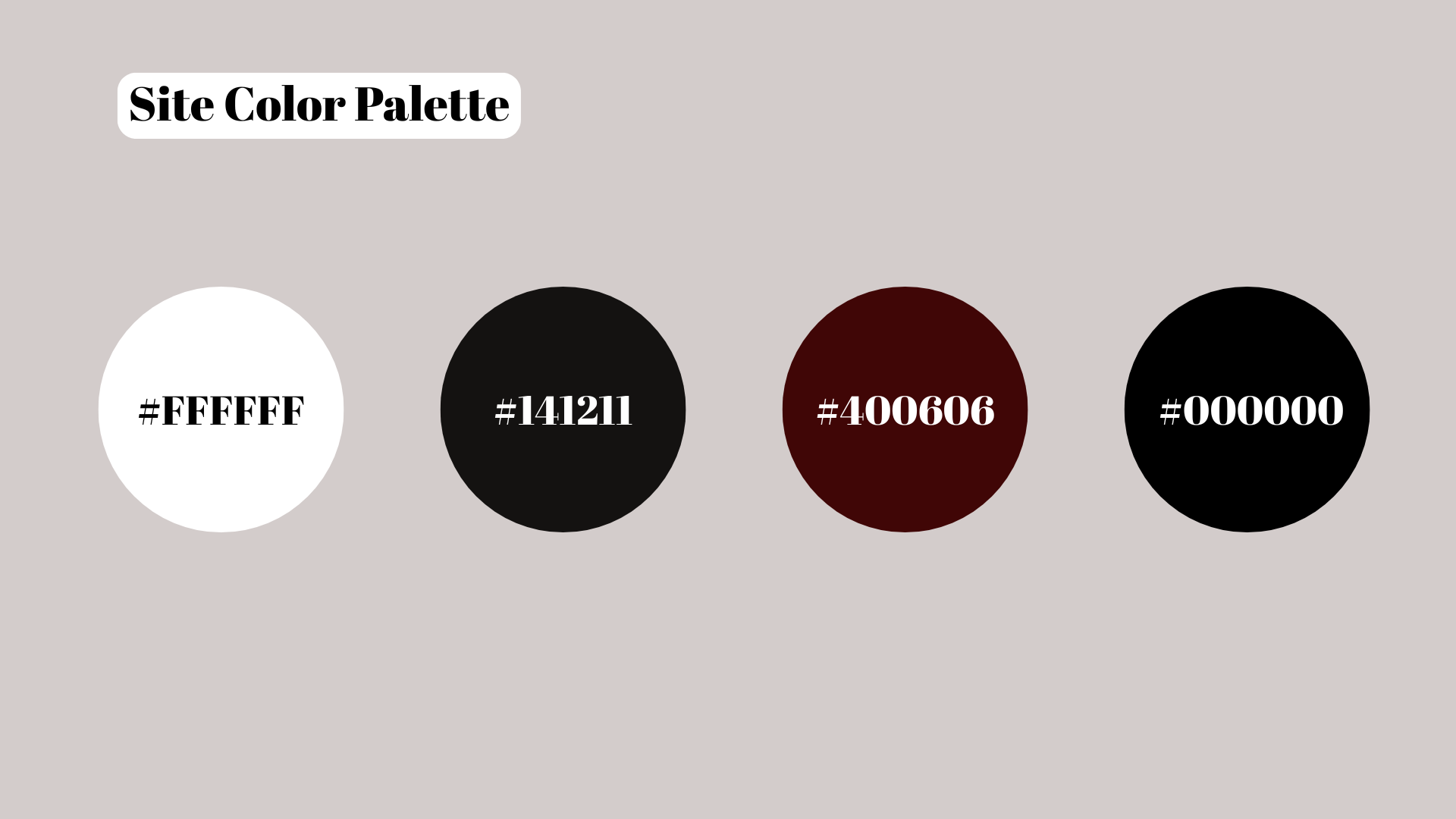
Foundation

Final Prototype
Ideas to Build On
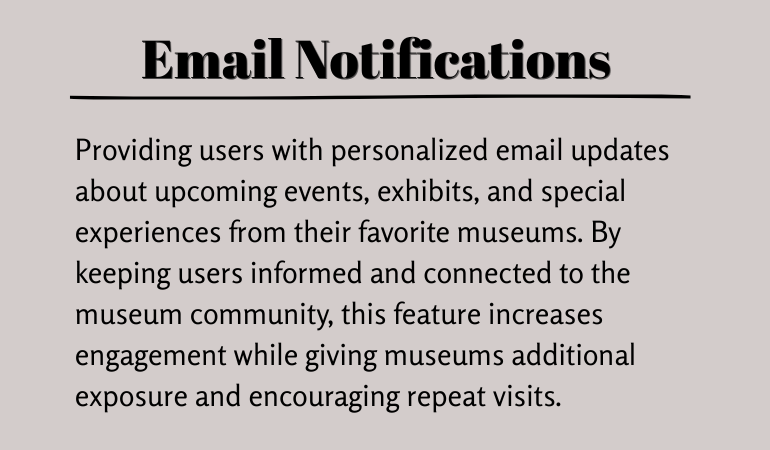
Possible next features:


Insights Gained
I care about museums, so this project started with problems I have seen firsthand. Visitors need better feature details up front, especially around access and scheduling.
The biggest takeaway was to keep the experience simple. I left some ideas for later so the first version could stay focused and easy to use.